
Meeting George Ewart Evans
Daniel A. Rabuzzi recounts meeting the prominent writer & folklorist George Ewart Evans


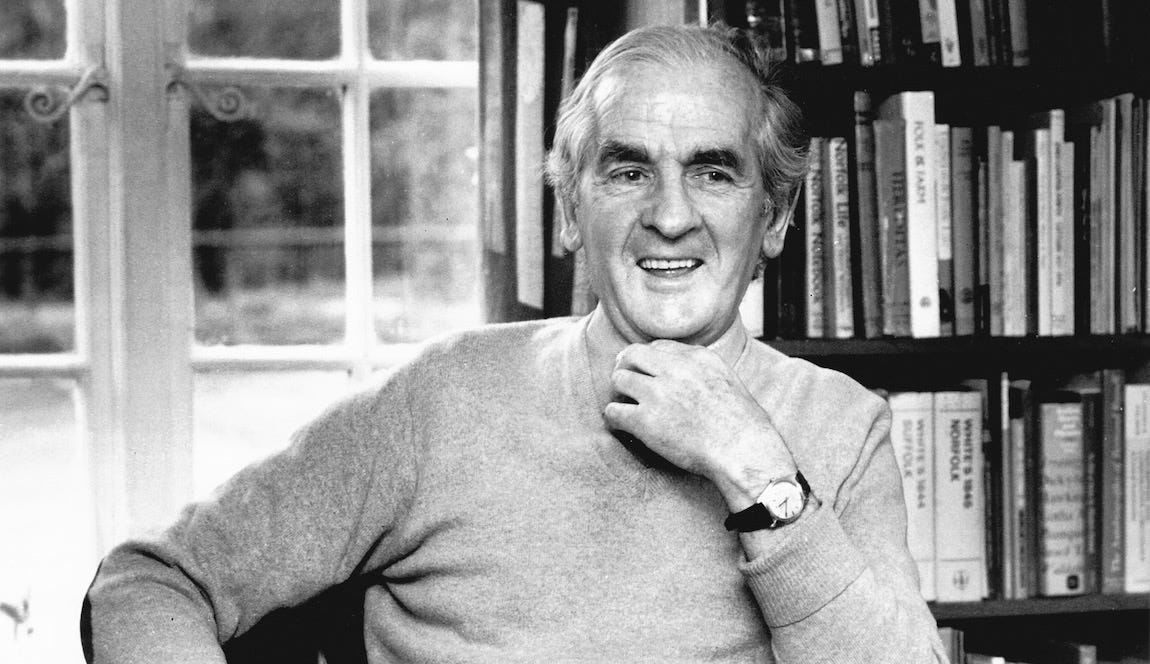
Over the past few weeks Daniel Rabuzzi has generously shared his writing and reflections on his experiences researching folklore in Norfolk in the early ‘80s. I have been sharing them here as part of the (North) Norfolk Folklore Project. This is the final part of this collaboration and Daniel has saved the best for last! If you’ve missed them, you can read the previous two articles here: Notes on the Folklore of the Lapwing and Old Norfolk Talkin’.
I’m very pleased to share below Daniel’s thoughts and recollections about his meeting with George Ewart Evans, the famous writer and folklorist.
Ellen and George Ewart Evans most kindly hosted me for an afternoon at their home in Brooke, Norfolk in November 1981. As I recall it, I had gotten their address from colleagues at The Folklore Society, had written them directly, and been gifted with this wonderful meeting.
Evans will presumably need little or no introduction to readers of Folklore Fieldwork – his pioneering contributions to East Anglian history, folklore, and folklife will be well known. Neil Lanham (here), Alun Howkins (here and here) and Robert Ashton (here and here), among others, have made important points about Evans’ influence and legacy. Blaxhall in Suffolk, where Ellen and George lived before moving to Brooke, continues to honor the author of Ask The Fellows Who Cut The Hay, The Pattern Under The Plough, and so many other books. The National Library of Wales recently acquired more archival material by and about Evans.
My recollection can only be a modest one, no more than my memory allows of a few hours many decades ago. Still, Evans’ words – both kind and fierce, like a hawk willing to come to your wrist – have lived in me all this time. They continue to be relevant, perhaps even more so in an ever more fractured, ever accelerating digital age, with AI now looming. What I recall was Evans emphasizing:
The vital importance of listening, not as a casual or merely polite act, but with all of one’s mind engaged, open to nuance, to silences, to what is half-said, to body language and gesture, to context.
The centrality of the speaker’s understanding of the world, regardless of how much those may or may not overlap with yours as listener. In short, acknowledge what Evans called “an amalgam of partial ‘histories’.” If you are an outsider to the culture you are exploring, then behave with appropriate humility.
Evans’ influence reaches far beyond East Anglia, of course. I cannot put it better than Paul Thompson did in his magisterial 1978 study, The Voice of the Past; Oral History (page 79): “His [i.e., Evans’] books are in their special way unsurpassable: direct yet subtle intertwinings of agricultural and economic history with cultural and community studies, portraits of individuals, and stories.” Evans maintained close ties with his native Wales. He was involved in the founding of the Oral History Society in the U.K. His books were certainly known to us working in the USA within what I would call the Milman Parry / Alfred Lord “Singer of Tales” paradigm (see here and here), and likewise to those of us inspired by the techniques of oral collection & collation championed by Scandinavians such as Evald Tang Kristensen in Denmark, Johannes Skar in Norway, and Carl Wilhelm von Sydow in Sweden. More generally, I see Evans sharing the worldview of the Lomaxes, Studs Terkel, Zora Neale Hurston, and Laurence Wylie.
I can do no better than to quote Evans from the book that has made the deepest impact on me over the years, Where Beards Wag All; The Relevance of the Oral Tradition (1970): “...oral testimony, the oldest form of recording known to man, will still have its uses in an age when scientific methods of keeping records are likely to multiply still further” (page 17; highlighting in the original); “...oral testimony can help the researcher both in town and country most of all by giving flesh to the material he has gathered from other sources” (p. 20); and “The East Anglian dialect is full of echoes, often unrecognized, of some of our earliest literature … here is some of the speech of Chaucer, of Spenser, of Shakespeare, of Tusser and of Clare kept wonderfully alive right into the twentieth century” (p. 168). Given that large language models and other digital constructs appear to be as distinct a rupture in our culture as the shift from the economy of the horse-drawn plow to that of steam engines, I find Evans’ words fresh and timely, more trenchant and apposite than ever.
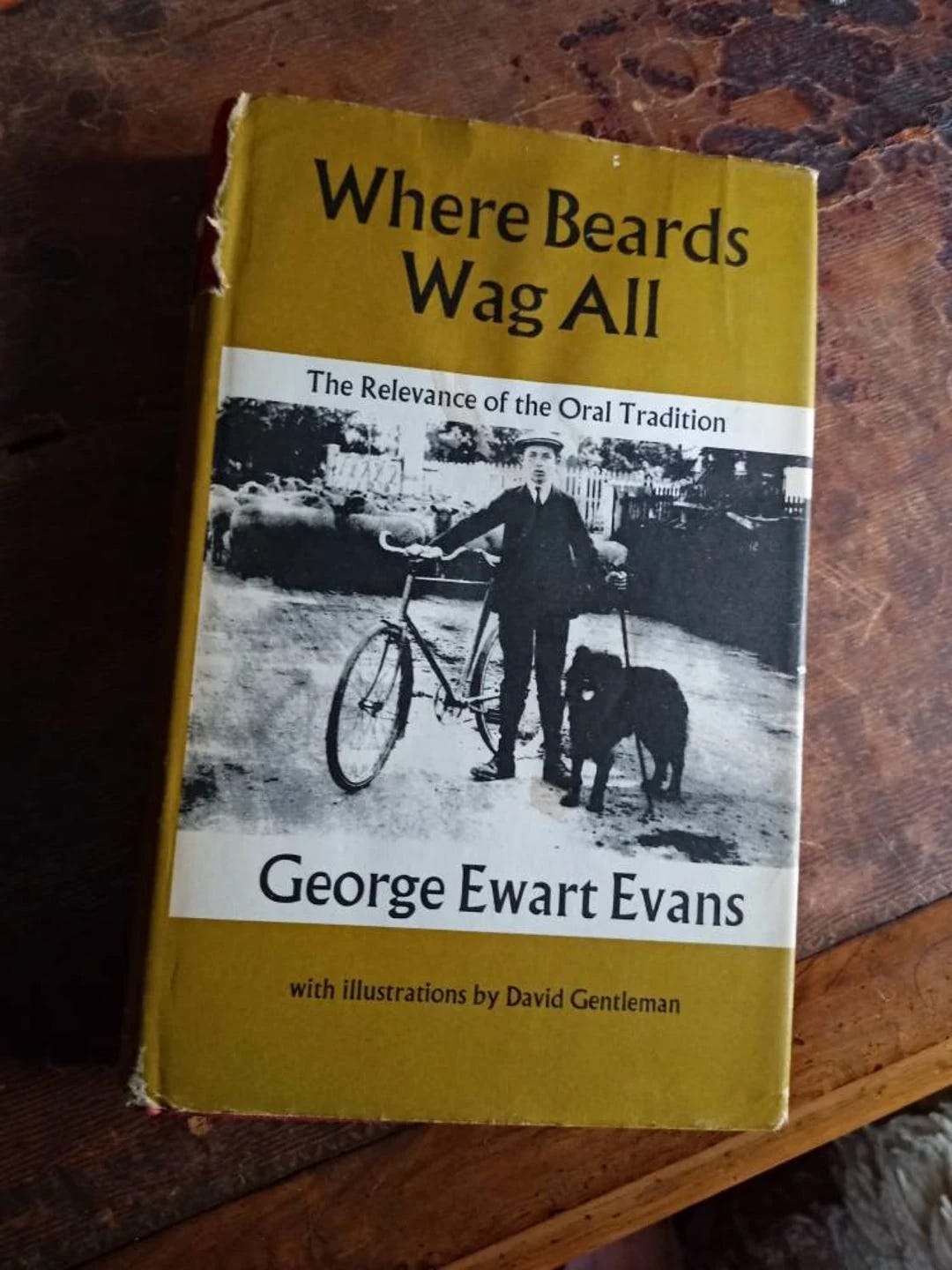
I must admit I am yet to read any of George Ewart Evans’ books (they are on my shopping list!) I have, however, recently attended an online course held by the Oral History Society - which I had no clue was linked to Ewart Evans - in anticipation of recording conversations about folklore. It is clear to see how much of an impact Ewart Evans has had on modern folklore research and writing, not only in the ways Daniel describes above, but also in the research and writing of Daniel’s seminal article on an aspect of Norfolk Folklore nearly lost to the ages: In Pursuit of Norfolk’s Hyter Sprites. I’d like to thank Daniel once again for generously allowing me to share his wonderful writing and insights on Norfolk folklore and I’m incredibly grateful that these pieces now form part of the (North) Norfolk Folklore Project archive here on Folklore Fieldwork.
 | A guest post by
|